
Hearing Tests & Evaluations
Comprehensive testing to understand your hearing health.
Understanding Your Hearing Health
A hearing test is the first step toward better hearing. At ACI Hearing Center, we perform comprehensive audiometric evaluations to determine the type, degree, and configuration of your hearing loss. Our tests are painless, non-invasive, and typically take about an hour.
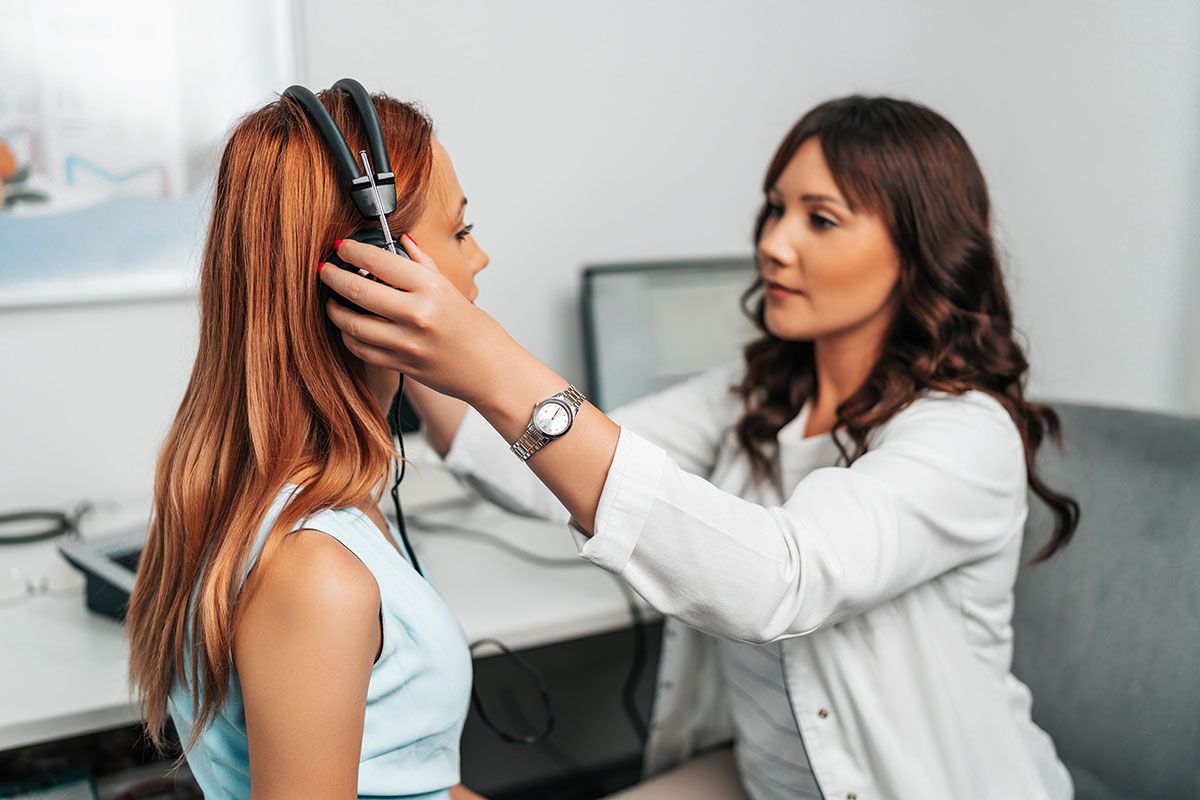
Getting fitted for your hearing test
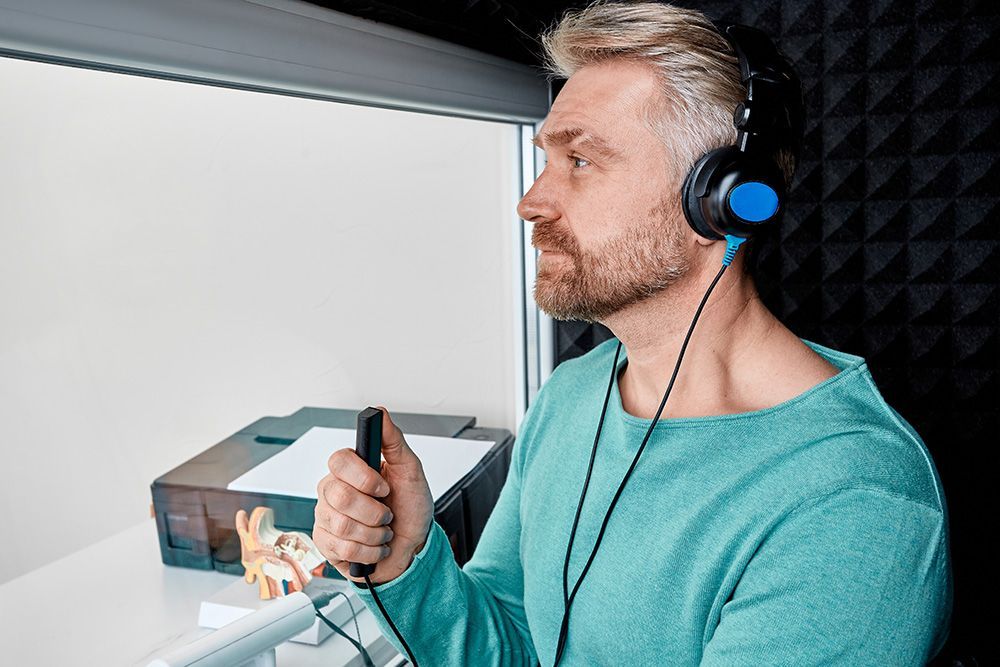
Taking the test in our sound-treated booth
Types of Hearing Tests We Perform
Pure Tone Audiometry
Measures how softly you can hear tones at different pitches (frequencies). This is a core part of determining the type and degree of hearing loss.
Bone Conduction
Helps determine whether hearing loss is conductive, sensorineural, or mixed by sending sound through vibration rather than through the ear canal.
Speech Audiometry
Measures your ability to hear and understand speech at different volume levels. This helps us understand how hearing loss affects your daily conversations.
Speech-in-Noise Testing
Evaluates how well you understand speech in background noise, one of the most common real-world listening challenges. Only about 20 to 30 percent of practices routinely do this test. We do. See the full page.
Acoustic Reflex Test
Measures how the muscles of the middle ear respond to loud sounds. This can help identify certain middle ear and auditory pathway conditions.
Tympanometry
Evaluates the function of your middle ear by measuring how your eardrum responds to changes in air pressure. Helps identify fluid, infections, or eardrum perforations.
Auditory Brainstem Response (ABR)
Measures the electrical activity in your auditory nerve and brainstem in response to sound. Useful for testing infants and identifying nerve-related hearing issues.
ASSR
Auditory Steady-State Response – Frequency-specific hearing threshold estimation for patients who cannot respond to traditional testing methods.
DPOAE
Distortion Product Otoacoustic Emissions – Objective test of outer hair cell function in the inner ear. Fast, non-invasive, and effective for all ages.
Loudness Discomfort Level (LDL) Testing
For sound sensitivity and hyperacusis. Added when a patient reports that normal sounds feel too loud or even painful. LDL testing measures the softest sound level that becomes uncomfortable across the audiometric range and guides sound tolerance therapy.
What to Expect During Your Test
- You will be seated in a quiet, sound-treated room.
- Our audiologist will examine your ears with an otoscope.
- You will wear headphones and respond to tones at various pitches and volumes.
- You may be asked to repeat words or sentences.
- Additional tests may be performed depending on your specific needs.
- Your audiologist will explain your results using an audiogram and recommend next steps.
If your results show hearing loss and hearing aids are recommended, the next step is a proper fitting. At ACI Hearing Center, every hearing aid we fit is verified with real-ear measurement, a probe-microphone test that confirms the device is delivering the right sound to your eardrum. Only about 22% of audiology practices do this on every fitting. We do.
Understanding Your Audiogram
An audiogram is a graph that shows your hearing ability at different pitches (frequencies) and volumes (decibels). Here is a general guide:
- Normal hearing: 0–25 dB. You can hear soft sounds like whispering and rustling leaves.
- Mild hearing loss: 26–40 dB. Difficulty hearing soft speech and conversations in noisy environments.
- Moderate hearing loss: 41–55 dB. Difficulty following conversations at normal volume. Hearing aids usually help significantly.
- Moderately severe hearing loss: 56–70 dB. Difficulty hearing without amplification. Hearing aids are strongly recommended.
- Severe hearing loss: 71–90 dB. Only loud sounds are audible. Powerful hearing aids or cochlear implants may be needed.
- Profound hearing loss: 91+ dB. Very few sounds are audible. Cochlear implants may be the best option.
Who Should Get a Hearing Test?
We recommend a baseline hearing test for adults over 50, and regular monitoring after that. You should also consider a test if you:
- Frequently ask people to repeat themselves
- Have difficulty understanding speech in noisy settings
- Turn up the TV or phone louder than others prefer
- Experience ringing, buzzing, or hissing in your ears (tinnitus)
- Have a history of noise exposure at work or from hobbies
- Are a veteran with service-related noise exposure
- Need to document occupational hearing loss for a Louisiana workers compensation claim
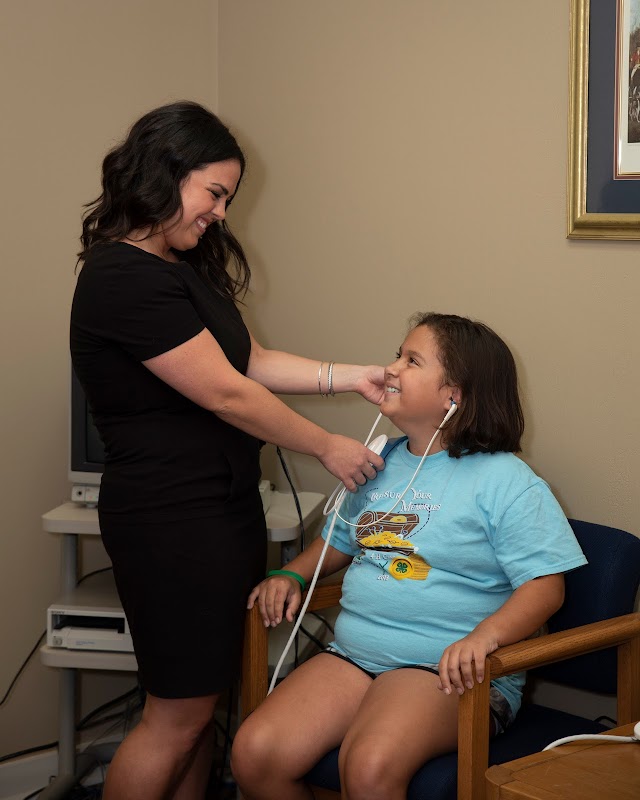
We care for patients of all ages: children and adults
Frequently Asked Questions About Hearing Tests
How long does a hearing test at ACI Hearing Center take?
A complete hearing evaluation at ACI Hearing Center usually takes about 45 to 60 minutes. This includes a short conversation about your hearing history, an inspection of your ears, and a series of tests where you respond to different sounds and words. We give you the results before you leave so you understand exactly what your hearing looks like that day.
How much does a hearing test cost at ACI Hearing Center?
Most diagnostic hearing tests at ACI Hearing Center are covered by insurance when ordered for a medical reason such as sudden hearing loss, dizziness, or ear pain. If you self-pay, our front desk gives you a flat quote when you book. A comprehensive diagnostic test typically falls in the range of $150 to $250 for self-pay patients in Lafayette. We verify your specific plan before your appointment so there are no surprises. Call (337) 223-9448 to get an exact quote for your situation.
Is a hearing test painful?
No. A hearing test is not painful and the equipment never touches anything sensitive. You will wear soft earphones or insert tips while listening to tones and words at different volumes. Some tests use a gentle puff of air or a small probe in the ear canal, but neither hurts. Most patients say a hearing test feels easier than a routine eye exam.
Does insurance cover a hearing test?
Many insurance plans cover diagnostic hearing tests when ordered for a medical reason, such as sudden hearing loss, dizziness, or ear pain. Coverage for routine hearing screenings varies by plan. Our team will verify your benefits before your appointment and explain any out-of-pocket cost upfront. Call us at (337) 223-9448 if you would like us to check your specific plan.
What happens during a hearing test?
Your audiologist will first look in your ears with a small light to check for wax or other issues. Next you will sit in a quiet test booth and listen to a series of beeps at different pitches and volumes, pressing a button or raising your hand when you hear them. You will also repeat back simple words to measure how clearly you understand speech. The whole process is interactive and you can ask questions any time.
Should I get my hearing tested if I do not have symptoms?
Yes. Hearing loss often happens slowly and many people do not notice it until family members do. A baseline hearing test in your 50s gives you something to compare future tests to and helps catch changes early, when they are easiest to treat. If you work around loud noise, have a family history of hearing loss, or take certain medications, an earlier baseline test is a good idea.
How often should adults get their hearing tested?
Most healthy adults should have a hearing test once every three years until age 50, and once a year after that. If you have noticed any hearing change, you should not wait. Anyone who wears hearing aids should have a follow-up test once a year to make sure the devices are still set correctly for their hearing.
Can I bring a family member to my hearing test appointment?
Yes, and we encourage it. A spouse, adult child, or close friend can help describe situations where hearing is hardest and can hear the test results with you. Having a second set of ears in the conversation makes it easier to remember what was discussed and to make decisions about next steps.
Do you test children at ACI Hearing Center?
Yes. Our pediatric audiologists are trained to test children and use age-appropriate methods, including play-based testing for younger kids. If your child has failed a school hearing screening, has frequent ear infections, or is having trouble in noisy classrooms, schedule an evaluation. We will explain every step in language your child can follow.