
When your hearing feels obstructed, it can impact your daily routine and leave you feeling withdrawn from your environment. It is typical to assume that muted sound indicates chronic hearing impairment, but the issue is often just a resolvable cerumen obstruction.
Distinguishing between a wax impaction and true hearing impairment is crucial for determining if you need a simple cleaning or a formal diagnostic exam. There is no reason to feel stressed if auditory inputs seem muted. While only an audiologist can confirm the cause, understanding these key markers of wax vs. hearing loss can provide immediate insight.
Recognizing the Markers of Canal Obstruction
Your ears generate wax as a natural protective mechanism to preserve health and keep contaminants away from the tympanic membrane. Issues occur when excessive wax builds up or becomes clogged.
Symptoms of a clog often feature:
- Progressive or sudden dampened hearing
- A feeling of canal fullness or a “clogged” sense
- Physical sensitivity or focused aching in the ear
- Ringing in the ear (tinnitus)
- Auditory sharpness that shifts or improves briefly with jaw movement
A signature of blockage-based sound fluctuations is asymmetry, typically impacting one side over the other. Thankfully, extracting the blockage generally clears the signs instantly.
Recognizing Permanent Impairment Symptoms
Hearing loss, particularly age-related or trauma-based hearing loss, has a tendency to develop slowly and doesn’t resolve when the canal is cleaned.
Indications of permanent auditory decline often involve:
- Difficulty understanding speech, especially in loud settings
- Often requiring repetition during everyday dialogue
- Turning up the television or smartphone audio higher than others prefer
- Difficulty detecting high-pitched tones
- Hearing uniformly diminished in both ears
Unlike earwax buildup, hearing loss doesn’t usually induce a feeling of blockage or fullness.
Primary Distinctions Summarized
Several basic indicators can help you ascertain whether you are contending with a manageable blockage or a more permanent change:
- Progression: Blockages can feel instant, while auditory decline is virtually always slow
- Reversibility: Wax-related hearing changes are usually brief; auditory impairment is often irreversible
- Sensations: Tactile “clogging” leads to wax, while the struggle to differentiate sounds points to loss
- Sides: Unilateral dull sound suggests cerumen, while both sides point to impairment
Reasons Not to Treat Yourself
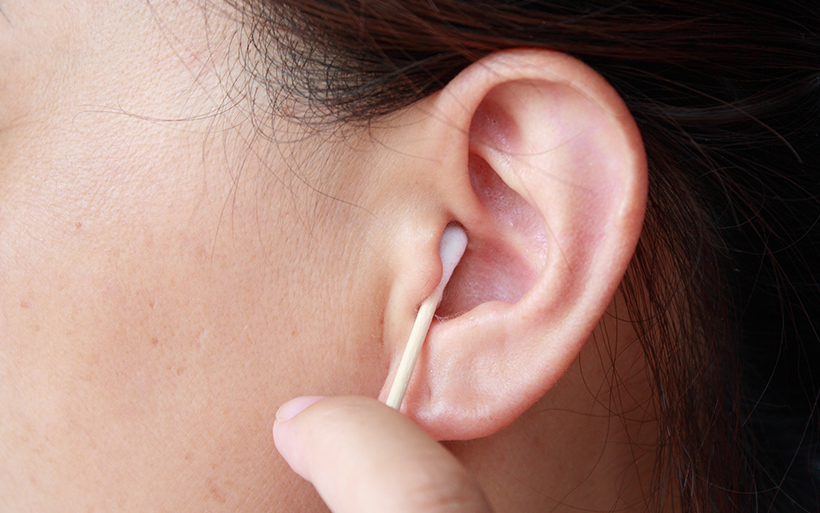
When hearing feels muffled, the instinctive urge is to use a cotton bud, but this is often a hazardous move. Regrettably, these can shove wax further in and exacerbate the situation.
Clinical data indicates that self-cleaning often results in unintended damage or more complex blockages.
Delaying a clinical check-up for actual hearing loss can result in losing out on solutions that shield your long-term cognitive and communal well-being.
The Critical Nature of a Clinical Ear Exam
A quick clinical check-up is the primary way to verify if cerumen is truly the cause of your dull auditory issues.
If an obstruction is found, a clinician can remove it safely, often restoring your hearing immediately.
When the canal is unobstructed but auditory input is still muted, a diagnostic test is necessary to evaluate your auditory health.
Experts recommend an instant hearing check if you begin failing to communicate or manage your environment.
Final Points on Earwax and Hearing Wellness
Muted sound is hardly a definitive sign of long-term impairment.
Frequently, the problem is simply a collection of wax that can be easily resolved.
A professional assessment will give you the answers you need to move forward without worry.
In the end, an expert consultation is the single certain way to differentiate between a temporary blockage and a lasting shift.
Finding the answer soon safeguards your well-being and gives you the peace of mind you have earned.
If your hearing seems off, avoid guesswork. A brief check can make all the difference, so reach out to our practice of clinicians today.